Have you ever looked at your blood test results and noticed the term “mixed hyperlipidemia”? If so, you’re not alone. Many people see this medical term for the first time and immediately wonder what it means, whether it’s serious, and what they should do next.
The name sounds complicated, but the concept is actually quite simple. Mixed hyperlipidemia refers to having more than one type of fat in the blood at unhealthy levels. Doctors often diagnose it during routine cholesterol testing, even when a person feels completely healthy.
Quick Answer:
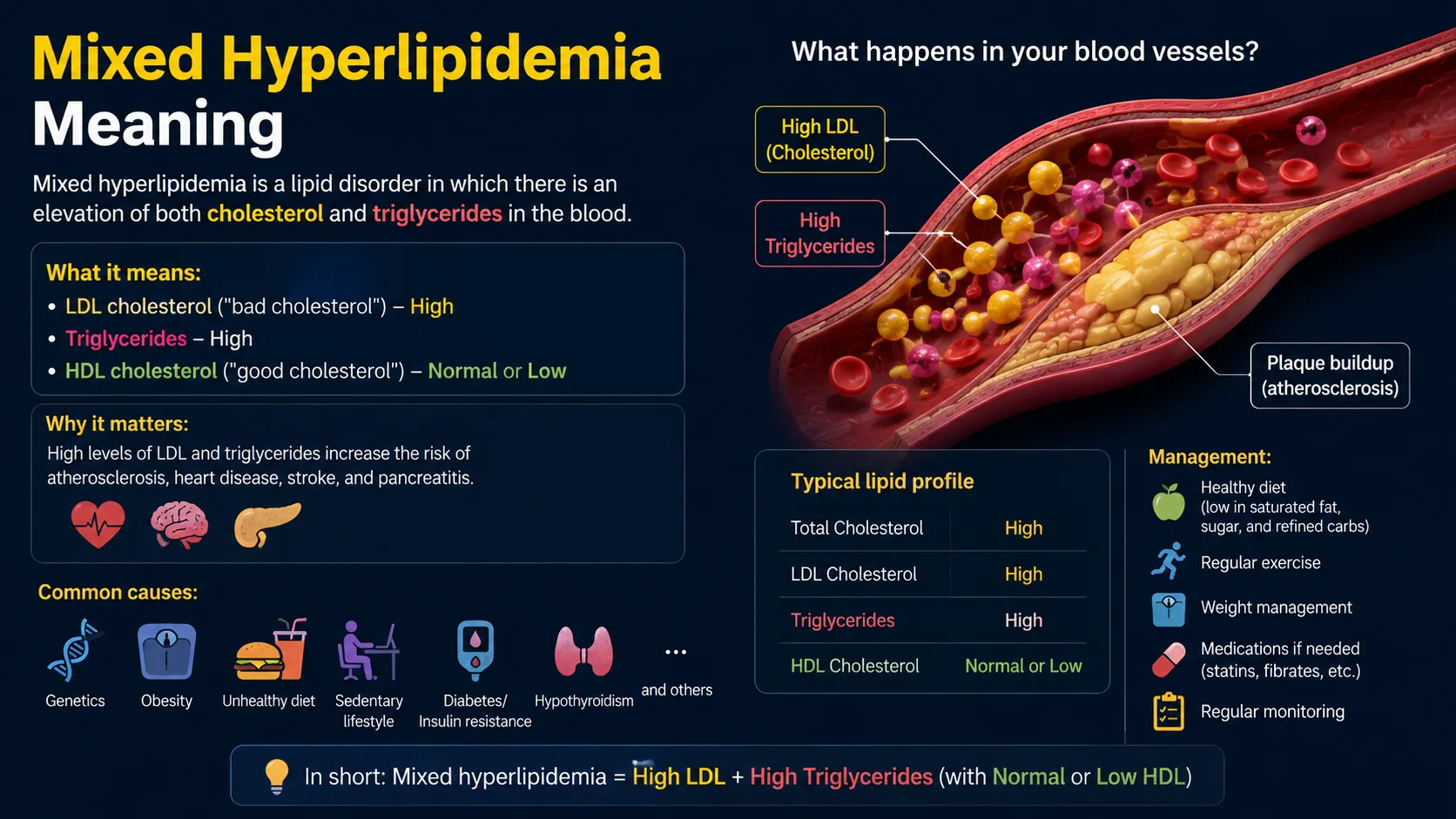
Mixed hyperlipidemia means having high levels of cholesterol and triglycerides in the blood at the same time. It is a medical condition that can increase the risk of heart disease, stroke, and other cardiovascular problems if left untreated.
What Does Mixed Hyperlipidemia Mean?
Mixed hyperlipidemia is a condition in which a person has elevated levels of multiple blood lipids, typically:
- High LDL (“bad”) cholesterol
- High triglycerides
- Sometimes low HDL (“good”) cholesterol
Lipids are fats that circulate in your bloodstream. Your body needs some lipids for normal function, but excessive amounts can build up in blood vessels and increase the risk of cardiovascular disease.
Example
A doctor reviews your blood test and finds:
- LDL cholesterol: High
- Triglycerides: High
- HDL cholesterol: Low
This combination may lead to a diagnosis of mixed hyperlipidemia.
In short: Mixed Hyperlipidemia = Multiple unhealthy blood fat levels = Increased cardiovascular risk.
Where Is Mixed Hyperlipidemia Commonly Discussed?
Unlike internet slang, mixed hyperlipidemia is a medical term commonly used in healthcare settings.
🏥 Healthcare Settings
- Doctor appointments
- Cardiology clinics
- Endocrinology clinics
📋 Medical Reports
- Cholesterol test results
- Lipid panel reports
- Annual health screenings
💻 Health Resources
- Medical websites
- Health forums
- Wellness blogs
📱 Online Communities
- Heart health groups
- Diabetes support communities
- Weight management forums
Usage Style: Formal medical terminology used by healthcare professionals and health educators.
Examples of Mixed Hyperlipidemia in Conversation
Here are some realistic examples of how the term may appear in conversations:
A: My doctor called about my blood test results.
B: What did they say?
A: They diagnosed me with mixed hyperlipidemia.
A: Why do I need to change my diet?
B: Your cholesterol and triglycerides are both high, which suggests mixed hyperlipidemia.
Patient: Is mixed hyperlipidemia serious?
Doctor: It can increase your risk of heart disease if left untreated.
A: I exercise regularly. Can I still have mixed hyperlipidemia?
B: Yes, genetics can also play a role.
A: What helped lower your cholesterol?
B: Better eating habits and treatment for my mixed hyperlipidemia.
A: Why did my doctor prescribe medication?
B: It may be to help manage mixed hyperlipidemia.
What Causes Mixed Hyperlipidemia?
Several factors can contribute to mixed hyperlipidemia.
Genetics 🧬
Some people inherit genes that affect how their bodies process fats.
Poor Diet 🍔
Diets high in:
- Saturated fats
- Trans fats
- Sugary foods
- Processed foods
can increase cholesterol and triglyceride levels.
Lack of Exercise 🛋️
Physical inactivity may contribute to unhealthy lipid levels.
Obesity ⚖️
Excess body weight is strongly associated with abnormal cholesterol and triglycerides.
Medical Conditions 🏥
Conditions such as:
- Type 2 diabetes
- Hypothyroidism
- Kidney disease
- Metabolic syndrome
may increase the risk.
Smoking and Alcohol 🚬🍺
Both can negatively affect blood lipid levels.
Symptoms of Mixed Hyperlipidemia
One of the challenging aspects of mixed hyperlipidemia is that it often causes no obvious symptoms.
Many people discover they have it only after:
- Routine blood testing
- Annual physical exams
- Heart health screenings
In severe cases, long-term untreated lipid abnormalities can contribute to:
- Heart disease
- Stroke
- Peripheral artery disease
- Pancreatitis (especially with very high triglycerides)
When to Take Mixed Hyperlipidemia Seriously
✅ When To Act
- Your doctor recommends treatment
- Blood tests show elevated cholesterol and triglycerides
- You have a family history of heart disease
- You have diabetes or high blood pressure
- Your cardiovascular risk is elevated
❌ When Not To Self-Diagnose
- Based solely on internet research
- Without blood test results
- Without consulting a healthcare professional
- Using symptoms alone
Comparison Table
| Situation | Example | Why It Matters |
|---|---|---|
| Routine Checkup | Lipid panel screening | Detects problems early |
| Family History | Parent has high cholesterol | Higher inherited risk |
| Diabetes Management | Regular cholesterol monitoring | Reduces heart disease risk |
| Heart Disease Prevention | Lifestyle improvements | Protects long-term health |
How Is Mixed Hyperlipidemia Treated?
Treatment typically focuses on improving cholesterol and triglyceride levels.
Healthy Diet 🥗
Doctors often recommend:
- More fruits and vegetables
- Whole grains
- Lean proteins
- Healthy fats
- Less processed food
Regular Exercise 🏃
Physical activity can help improve lipid levels and overall cardiovascular health.
Weight Management ⚖️
Even modest weight loss may improve cholesterol and triglycerides.
Medication 💊
Depending on severity, doctors may prescribe medications such as:
- Statins
- Fibrates
- Omega-3 fatty acid therapies
- Other lipid-lowering treatments
Smoking Cessation 🚭
Quitting smoking improves cardiovascular health significantly.
Similar Medical Terms and Related Conditions
| Term | Meaning | When Used |
|---|---|---|
| Hyperlipidemia | High blood fats | General diagnosis |
| Hypercholesterolemia | High cholesterol | Elevated cholesterol levels |
| Hypertriglyceridemia | High triglycerides | Elevated triglyceride levels |
| Dyslipidemia | Abnormal blood lipids | Broad medical term |
| Familial Combined Hyperlipidemia | Inherited lipid disorder | Genetic condition |
| Metabolic Syndrome | Group of cardiovascular risk factors | Often linked to lipid abnormalities |
FAQ:
Is mixed hyperlipidemia dangerous?
It can increase the risk of heart disease, stroke, and other cardiovascular complications if not managed properly.
Can mixed hyperlipidemia be cured?
Many people successfully control it through lifestyle changes and medical treatment, though ongoing management is often necessary.
What foods should I avoid?
Foods high in saturated fat, trans fat, refined sugar, and heavily processed ingredients are often limited.
Is mixed hyperlipidemia hereditary?
Yes. Genetics can play a significant role in some cases.
Can exercise help?
Absolutely. Regular physical activity can improve cholesterol and triglyceride levels.
How is it diagnosed?
Doctors diagnose it through a lipid panel blood test that measures cholesterol and triglyceride levels.
What age does it occur?
It can occur at any age but becomes more common in adulthood.
Can children have mixed hyperlipidemia?
Yes, especially if there is a strong genetic component.