The first time I started learning to drive, I remember seeing dozens of road signs everywhere. Some were easy to understand, while others left me wondering what they actually meant. If you’ve ever looked at a traffic sign and felt confused, you’re definitely not alone.
Traffic signs are an important part of road safety. They help drivers, cyclists, and pedestrians understand what to do, where to go, and what dangers to watch out for. Learning their meanings can make driving safer and less stressful.
Quick Answer:
Traffic signs are official road symbols that communicate rules, warnings, directions, and important information to road users. They are designed to keep traffic organized and everyone safe on the road.
What Does Traffic Signs and Meaning Mean in Text?
Unlike internet slang, “traffic signs and meaning” refers to understanding the symbols and signs placed on roads and highways. These signs provide instructions, warnings, and guidance to drivers and pedestrians.
For example:
Example: A red octagon sign means “Stop.” Drivers must come to a complete stop before proceeding.
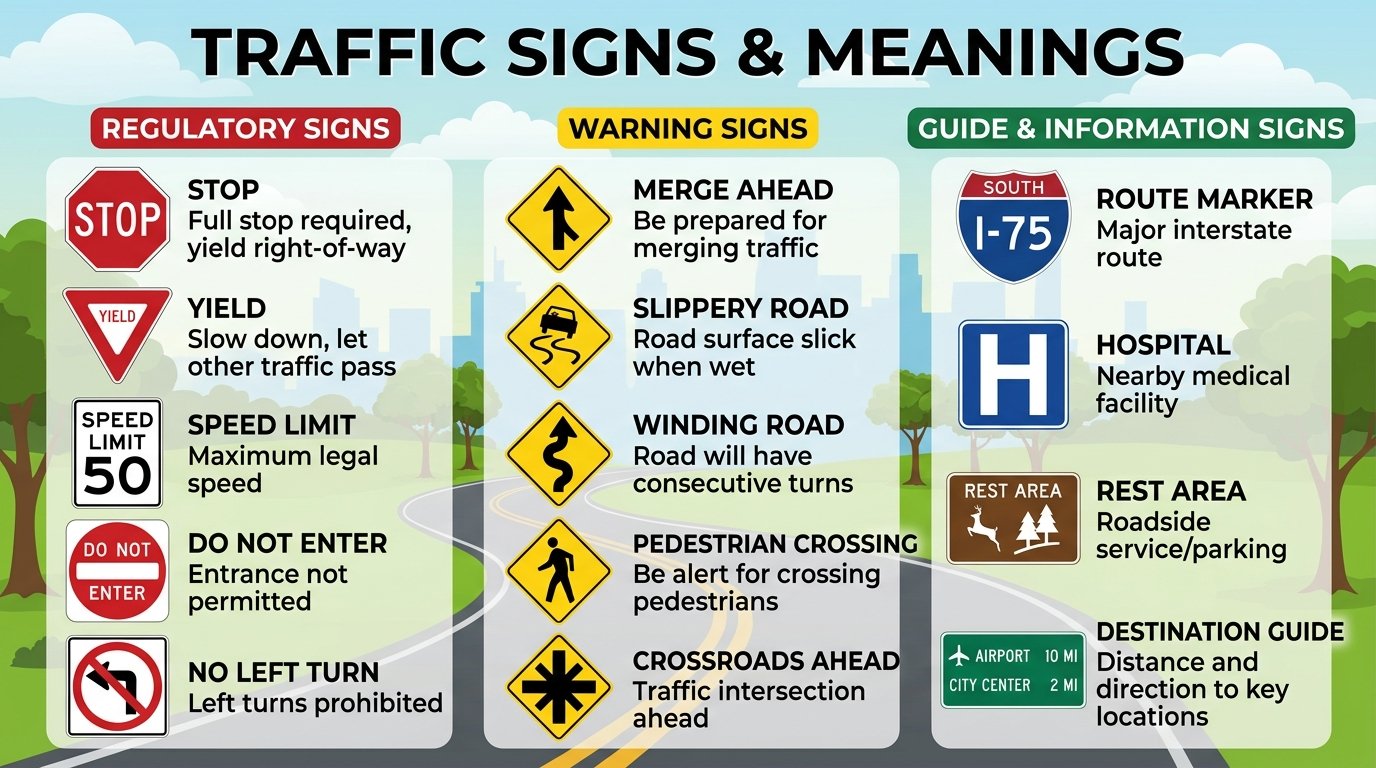
Traffic signs are usually divided into categories such as regulatory signs, warning signs, and informational signs.
In short: Traffic Signs = Road Symbols = Instructions and Safety Information for Road Users.
Where Is Traffic Signs and Meaning Commonly Used?
You will commonly encounter traffic signs in:
- 🚗 Roads and highways
- 🏙️ City streets
- 🚸 School zones
- 🚦 Traffic intersections
- 🚲 Bicycle lanes
- 🚶 Pedestrian crossings
- 🛣️ Motorways and expressways
Traffic signs are considered official and formal because they are part of transportation laws and safety regulations.
Examples of Traffic Signs and Their Meaning
Here are some common traffic signs and what they mean:
1. 🛑 Stop Sign
Meaning: Come to a complete stop before moving forward.
2. 🚫 No Entry
Meaning: Vehicles are not allowed to enter this road.
3. ⚠️ Warning Sign
Meaning: Be careful. There may be hazards ahead.
4. 🚸 School Crossing
Meaning: Watch for children crossing the road.
5. 🚦 Traffic Signal Ahead
Meaning: A traffic light is coming up ahead.
6. ⛔ Do Not Enter
Meaning: Entry is prohibited from this direction.
7. 🚶 Pedestrian Crossing
Meaning: Watch for people crossing the road.
Common Traffic Sign Situations
Here are realistic examples of how traffic signs affect driving:
Driver A: Why did you stop here?
Driver B: There’s a stop sign ahead. 🛑
Driver A: Can I turn here?
Driver B: No, the sign says “No Entry.” 🚫
Driver A: Why are you slowing down?
Driver B: The warning sign shows a sharp curve ahead. ⚠️
Driver A: Why is traffic moving slowly?
Driver B: We’re entering a school zone. 🚸
Driver A: Should I speed up?
Driver B: No, the speed limit sign says 40 km/h. 🚗
Driver A: Why are cars stopping?
Driver B: There’s a pedestrian crossing ahead. 🚶
When to Follow and When to Pay Extra Attention to Traffic Signs
✅ When To Follow Traffic Signs
- While driving on public roads
- At intersections and crossings
- In school zones
- On highways and motorways
- During construction zones
- When parking your vehicle
❌ When Not To Ignore Traffic Signs
- Never ignore stop signs
- Never ignore speed limits
- Never enter roads marked “No Entry”
- Never bypass warning signs
- Never park where parking is prohibited
- Never drive through restricted areas
| Context | Example Sign | Why It Works |
|---|---|---|
| Intersection | Stop Sign 🛑 | Prevents collisions |
| School Zone | School Crossing 🚸 | Protects children |
| Highway | Speed Limit Sign | Controls traffic speed |
| Construction Area | Warning Sign ⚠️ | Alerts drivers to hazards |
| Parking Area | No Parking Sign 🚫 | Maintains traffic flow |
Similar Traffic Signs or Alternatives
| Sign | Meaning | When to Use |
|---|---|---|
| 🛑 Stop | Come to a complete stop | Intersections |
| 🚫 No Entry | Entry prohibited | Restricted roads |
| ⚠️ Warning | Danger ahead | Hazardous areas |
| 🚸 School Crossing | Children nearby | School zones |
| 🚶 Pedestrian Crossing | People crossing | Urban streets |
| 🚦 Traffic Signal Ahead | Traffic light approaching | Major roads |
FAQ:
Traffic signs are symbols placed on roads to provide instructions, warnings, and information.
Why are traffic signs important?
They help prevent accidents, guide traffic, and improve road safety.
What does a stop sign mean?
A stop sign requires drivers to come to a complete stop before proceeding.
What color are warning signs usually?
Many warning signs use yellow backgrounds with black symbols.
What does a no-entry sign mean?
It means vehicles are not allowed to enter that road or area.
Are traffic signs the same worldwide?
Many signs are similar internationally, but some vary by country.
What is the purpose of speed limit signs?
They inform drivers of the maximum legal speed allowed.
Why should drivers obey traffic signs?
Obeying signs helps reduce accidents and keeps roads organized.
Conclusion
Traffic signs play a crucial role in keeping roads safe and organized. Whether you’re a new driver or an experienced one, understanding traffic signs and their meanings can help you make safer decisions on the road.
From stop signs and warning signs to school crossings and speed limits, each sign provides valuable information that protects drivers, passengers, cyclists, and pedestrians alike.

Maya Angelou ek poet, memoirist aur civil rights activist thi. Uski autobiographical series I Know Why the Caged Bird Sings duniya bhar mein millions ko inspire karti hai.
Inspirational author profiles on pickuplinee.com.