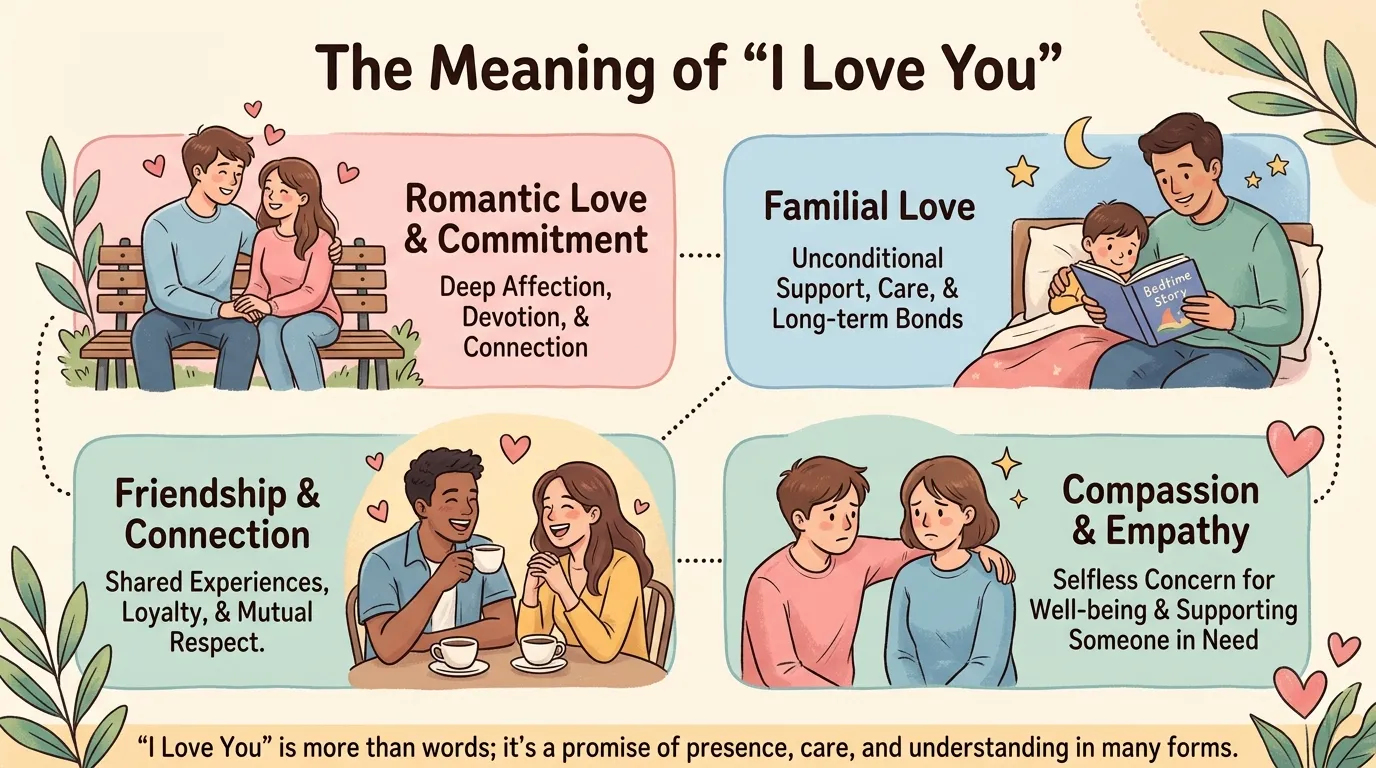
Have you ever received a message saying “Je t’aime ❤️” and wondered what it actually means? Maybe you spotted it in a text, social media caption, song lyric, or romantic TikTok video. If you don’t speak French, it can definitely leave you curious.
The phrase is one of the most famous French expressions in the world, often associated with love, romance, and deep affection. Whether you’re learning French or simply trying to understand a message someone sent you, knowing its meaning can help you avoid confusion.
Quick Answer:
Je t’aime means “I love you” in French. It’s a romantic and affectionate way of expressing love, care, or strong feelings toward someone.
What Does Je T’aime Mean in Text?
Je t’aime is a French phrase that directly translates to “I love you” in English.
Breaking it down:
- Je = I
- t’ = you
- aime = love
When someone sends “Je t’aime” in a text, they’re usually expressing genuine affection or romantic love. In many cases, it carries a stronger emotional meaning than simply saying you like someone.
Example
A: i miss you so much ❤️
B: je t’aime 😘
In this conversation, the sender is expressing love and deep affection.
In short: Je t’aime = I love you = expressing love or strong affection.
Where Is Je T’aime Commonly Used?
You’ll often see Je t’aime used in romantic and social situations, both online and offline.
📱 Popular Places You Might See It
- ❤️ Text messages between couples
- 💬 Snapchat chats
- 🎵 Song lyrics
- 📸 Instagram captions
- 🎥 TikTok videos
- 💕 Valentine’s Day posts
- 🌍 French-language conversations
Tone and Style
- ❤️ Romantic
- 😊 Affectionate
- 💌 Emotional
- 🌹 Often used between partners
While it’s commonly romantic, close family members in French-speaking cultures may also use it to express love.
It’s generally considered more emotional than casual internet slang.
Examples of Je T’aime in Conversation
Here are some realistic examples of how people use Je t’aime in chats and messages.
Example 1
A: thanks for always being there for me ❤️
B: je t’aime 🥰
Example 2
A: can’t wait to see you tonight 😘
B: je t’aime too ❤️
Example 3
A: goodnight, sleep well 🌙
B: je t’aime ❤️
Example 4
A: you’re my favorite person 😊
B: aww, je t’aime 😍
Example 5
A: i miss you already 😢
B: je t’aime, see you soon ❤️
Example 6
A: today was amazing
B: je t’aime so much 💕
Example 7
A: happy anniversary ❤️
B: je t’aime forever 🥰
These examples show that the phrase is usually used in loving, affectionate, and romantic conversations.
When to Use and When Not to Use Je T’aime
Like any expression of love, Je t’aime works best in the right context.
✅ When To Use
- Romantic relationships
- Expressing genuine love
- Anniversary messages
- Sweet goodnight texts
- Valentine’s Day messages
- Loving social media captions
- Deep emotional conversations
❌ When Not To Use
- Professional work emails
- Business conversations
- Formal requests
- Customer support chats
- New acquaintances you barely know
- Serious workplace discussions
- Situations where romantic intent may be misunderstood
Usage Comparison Table
| Context | Example Phrase | Why It Works |
|---|---|---|
| Friend Chat | “You’re awesome!” | Friendly without romantic meaning |
| Romantic Text | “Je t’aime ❤️” | Expresses love and affection |
| Work Chat | “Thank you for your help.” | Professional and appropriate |
| “I appreciate your support.” | Formal and respectful | |
| Anniversary Message | “Je t’aime forever ❤️” | Romantic and meaningful |
Similar Slang Words or Alternatives
If you want to express affection in different ways, here are some alternatives to Je t’aime.
| Slang/Phrase | Meaning | When to Use |
|---|---|---|
| ILY | I Love You | Casual texting |
| Love ya | I care about you | Friendly conversations |
| XOXO | Hugs and kisses | Cute messages |
| Miss you ❤️ | Missing someone | Long-distance chats |
| Je t’adore | I adore you | Strong affection |
| Love u | Informal I love you | Casual texting |
Je T’aime vs Je T’Adore
Many people confuse these two French expressions.
- Je t’aime = I love you ❤️
- Je t’adore = I adore you 😊
While both express affection, Je t’aime is usually considered stronger and more romantic.
FAQ:
Is Je t’aime romantic?
Usually, yes. It most often means “I love you” in a romantic sense.
What language is Je t’aime?
It’s a French phrase.
Can friends say Je t’aime?
In French-speaking cultures, friends or family members may use it affectionately, but it often carries a stronger emotional meaning than friendship.
Does Je t’aime mean I like you?
Not exactly. It usually means “I love you,” which is stronger than simply liking someone.
Is Je t’aime formal or casual?
It’s neither formal nor slang. It’s a genuine expression of affection commonly used in personal conversations.
How do you respond to Je t’aime?
Common responses include:
- Je t’aime aussi ❤️ (I love you too)
- Moi aussi ❤️ (Me too)
- Toujours ❤️ (Always)
Is Je t’aime used on social media?
Yes. You’ll often see it in captions, comments, stories, romantic posts, and song quotes.
Can I use Je t’aime if I don’t speak French?
Absolutely. Many people use it because it’s widely recognized as a romantic phrase meaning “I love you.”
Conclusion
Je t’aime is one of the most beautiful and recognizable French expressions. Whether you see it in a text message, social media post, love song, or romantic conversation, it simply means “I love you.” The phrase carries warmth, affection, and emotional connection, making it a popular choice for expressing heartfelt feelings.
The next time someone sends you “Je t’aime ❤️,” you’ll know they’re sharing a message filled with love and affection.
In short: Je t’aime = I love you ❤️

Maya Angelou ek poet, memoirist aur civil rights activist thi. Uski autobiographical series I Know Why the Caged Bird Sings duniya bhar mein millions ko inspire karti hai.
Inspirational author profiles on pickuplinee.com.