Have you ever heard someone say, “All my efforts were in vain,” and wondered what they actually meant? Maybe you saw it in a text, a TikTok caption, or even in a dramatic movie scene.
At first, it can sound a little confusing because “vain” usually reminds people of someone being overly proud or obsessed with looks.
But in this phrase, it has a completely different meaning.
Quick Answer:
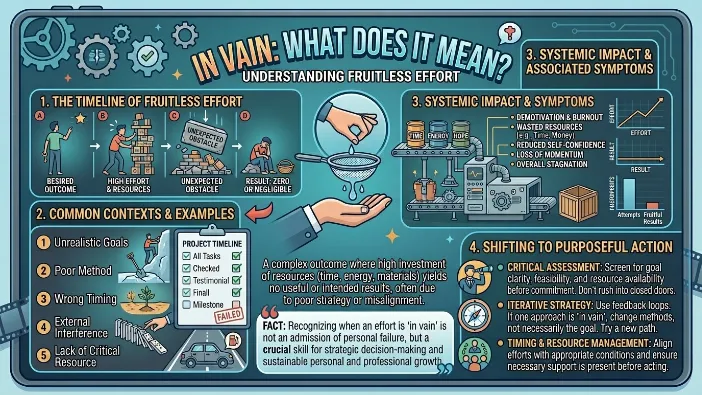
“In vain” means “without success” or “for no useful result.
” It’s a slightly emotional and expressive way of saying that something didn’t work out despite effort.
People use it when they tried hard, waited, hoped, or worked for something but nothing happened in the end.
What Does In Vain Mean in Text?
The phrase “in vain” means that something was done without success, without results, or uselessly.
If someone says they tried “in vain,” they mean they made an effort, but it didn’t help or change anything.
Simple Meaning:
- Tried hard → no success
- Waited → nothing happened
- Hoped → didn’t work out
Example:
“I called him all night, but it was in vain.”
This means the person kept calling, but the calls didn’t help or get answered.
In short: In vain = without success = trying for nothing.
Even though it’s an older phrase, people still use it online because it sounds emotional, dramatic, and relatable.
Where Is In Vain Commonly Used?
You’ll usually see “in vain” in emotional conversations, captions, or storytelling posts.
📱 Common Places It Appears:
- 💬 Text messages
- 🎵 Song lyrics
- 🎬 Movie dialogue
- 📖 Books and quotes
- 📲 TikTok captions
- 🐦 Tweets/posts on social media
- ❤️ Relationship conversations
Tone of the Phrase:
- Slightly formal
- Emotional or dramatic
- Thoughtful and expressive
- Less casual than normal texting slang
People often use it when talking about:
- Failed relationships
- Unanswered prayers
- Hard work with no reward
- Waiting for someone
- Trying repeatedly without success
Examples of In Vain in Conversation
Here are some realistic examples of how “in vain” is used in chats and texts.
Example 1
A: did she reply yet?
B: nope 😭 i waited all day in vain
Example 2
A: how was the exam prep?
B: honestly, all that studying was in vain 💀
Example 3
A: why are u upset?
B: tried fixing everything but it was all in vain
Example 4
A: did your wifi start working?
B: i restarted the router 10 times in vain 😩
Example 5
A: still thinking about him?
B: yeah… loved him in vain tbh
Example 6
A: did the team win?
B: nope, our comeback attempt was in vain 😔
Example 7
A: why were you calling me?
B: lol in vain apparently 😂
These examples show that the phrase often carries disappointment, frustration, or sadness.
When to Use and When Not to Use In Vain
Like many phrases, “in vain” works best in certain situations.
✅ When To Use “In Vain”
- When effort failed
- Emotional conversations
- Storytelling or captions
- Dramatic or expressive texting
- Talking about disappointment
- Reflective or poetic writing
❌ When Not To Use “In Vain”
- Professional business emails
- Happy or celebratory situations
- Urgent instructions
- Very casual jokes with friends
- Situations where simpler wording is better
Usage Comparison Table
| Context | Example Phrase | Why It Works |
|---|---|---|
| Friend Chat | “I waited in vain 😭” | Emotional & relatable |
| Relationship Talk | “I loved him in vain.” | Expresses heartbreak |
| Social Media Caption | “All that effort… in vain.” | Dramatic & aesthetic |
| Work Chat | “The attempt was unsuccessful.” | More professional |
| “Unfortunately, our efforts did not succeed.” | Clear & formal |
Similar Slang Words or Alternatives
Here are some phrases and slang alternatives that have a similar meaning or feeling.
| Slang / Phrase | Meaning | When to Use |
|---|---|---|
| For nothing | Without results | Casual conversations |
| Pointless | Useless or meaningless | Everyday texting |
| Waste of time | Not worth the effort | Frustrated reactions |
| No luck | Didn’t succeed | Friendly chats |
| Failed attempt | An unsuccessful try | Neutral situations |
| Tried for nothing | Effort had no result | Emotional storytelling |
Example Comparison:
- “I studied in vain.” → More emotional/dramatic
- “Studying was pointless.” → More casual and direct
Why Do People Use “In Vain” Online?
Even though it sounds slightly formal, people still love using “in vain” because it feels:
- Deep
- Emotional
- Poetic
- Dramatic
- Relatable
It’s especially popular in:
- Sad captions
- Heartbreak posts
- Emotional edits
- Song-inspired content
- Reflective tweets
For example:
“Stayed loyal in vain.”
Short, emotional phrases like this often perform well on social media because they instantly communicate disappointment.
Is “In Vain” Formal or Casual?
“In vain” sits somewhere in the middle.
It can sound:
- Formal in writing
- Emotional in texting
- Poetic in captions
- Serious in conversations
That’s why you might hear it in:
- Literature
- Movies
- Songs
- Social media posts
But you probably won’t use it much in:
- Office chats
- School assignments
- Customer service emails
Common Mistakes People Make
❌ Confusing “vain” with vanity
Some people think “in vain” relates to being self-obsessed or arrogant.
But in this phrase:
- “vain” = useless or unsuccessful
It has nothing to do with appearance or ego.
❌ Using it in happy situations
“In vain” always carries disappointment or failure.
Incorrect:
“We partied in vain 🎉”
Correct:
“We waited for the concert tickets in vain.”
FAQs :
What does “in vain” mean?
It means doing something without success or useful results.
Is “in vain” negative?
Usually yes. It often expresses disappointment or frustration.
Is “in vain” slang?
Not exactly. It’s a common English phrase, but people also use it online and in texting.
Can I use “in vain” in casual texting?
Yes, especially in emotional or dramatic conversations.
Does “in vain” sound formal?
A little. It sounds more expressive and poetic than everyday slang.
What’s another way to say “in vain”?
You can say:
- for nothing
- unsuccessfully
- pointlessly
- without results
Conclusion
“In vain” is a powerful phrase that means someone tried hard but failed to achieve the result they wanted.
if it’s waiting for a text back, studying for an exam, or fighting for a relationship, the phrase captures that feeling of effort leading nowhere.
Even though it’s not modern slang, it’s still very popular online because it sounds emotional, relatable, and meaningful.
So next time you see someone say their efforts were “in vain,” you’ll know they’re talking about disappointment after trying hard.

Mark Twain, real name Samuel Clemens, America ka legendary humorist aur novelist tha, jiske works The Adventures of Tom Sawyer aur Adventures of Huckleberry Finn ne American literature ko shape kiya. Uski writing wit, satire, aur realistic storytelling ka perfect mix hai.
Featured on pickuplinee.com.