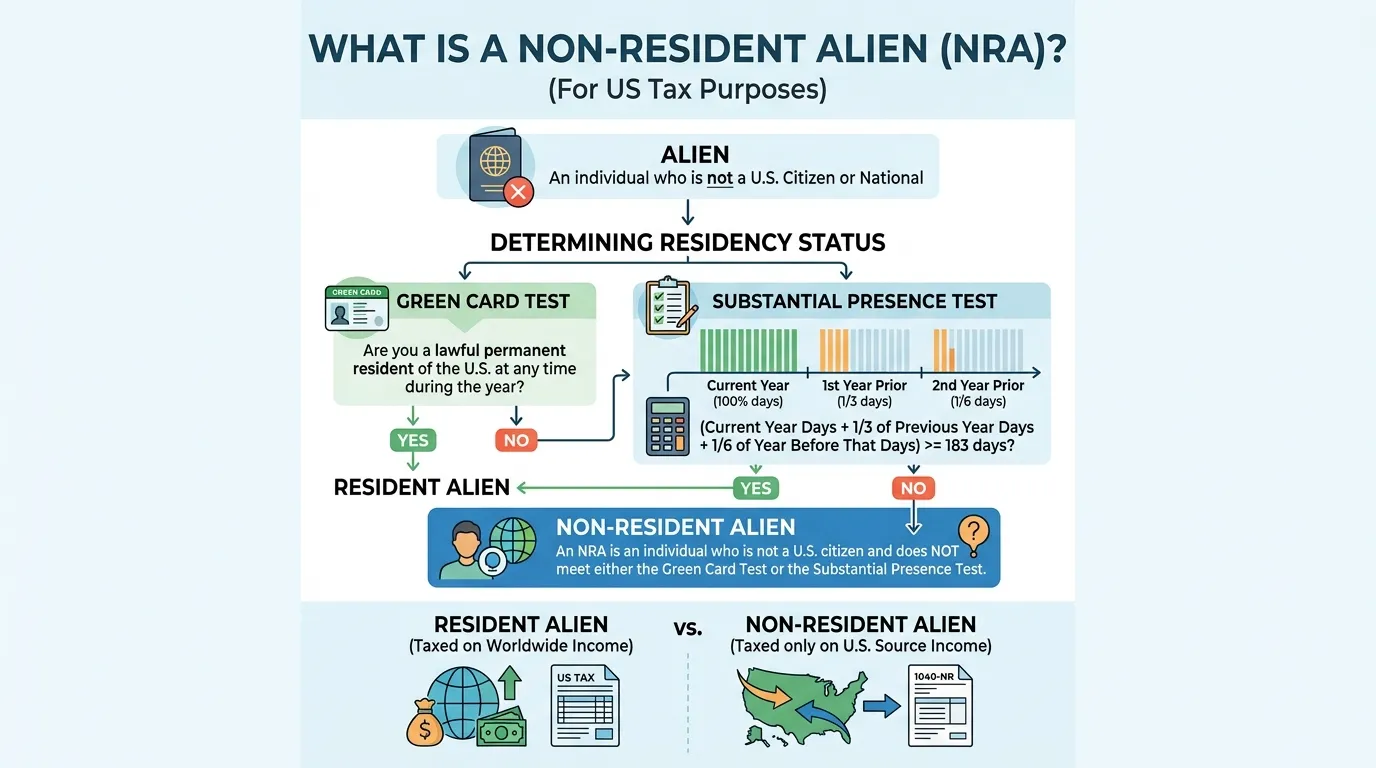
You’re filling out a tax form, opening a bank account, or scrolling through immigration discussions online when suddenly you see the term “non resident alien.
” At first, it sounds confusing maybe even like something from a sci-fi movie 👽.
But in reality, it’s a common legal and tax term used in the United States.
A lot of people search this phrase because they want to understand what it means, if it applies to them, and how it’s used in official documents or conversations.
The good news? It’s actually pretty simple once you break it down.
Quick Answer:
Non resident alien means a person who is not a U.S. citizen and does not officially qualify as a U.S. resident for tax purposes.
It’s a formal legal and financial term often used in immigration, banking, and taxes.
What Does Non Resident Alien Mean in Text?
A non resident alien is someone who lives outside the United States or does not meet the requirements to be treated as a U.S. resident under tax laws.
In simple words:
- Non resident = not officially living in the U.S. as a resident
- Alien = a non-U.S. citizen (legal government term)
The phrase is commonly shortened to NRA in forms, banking, and tax conversations.
Example Sentence
“I’m an international student, so the bank classified me as a non resident alien.”
This term is mostly used in:
- Tax forms
- Immigration paperwork
- Banking documents
- Financial accounts
- Employment records
In short: Non Resident Alien = non-U.S. citizen who is not considered a U.S. resident for tax purposes.
Where Is Non Resident Alien Commonly Used?
Unlike internet slang, this phrase is mostly formal and official. However, people still discuss it online in chats and forums.
📄 Official Documents
- Tax forms
- Visa paperwork
- Bank applications
- Payroll systems
💬 Online Discussions
- Reddit immigration forums
- Student visa groups
- Expat communities
- Finance discussions
📱 Social Media & Messaging
- TikTok immigration content
- WhatsApp chats about visas
- Facebook expat groups
- LinkedIn professional discussions
🎓 Common Users
- International students
- Foreign workers
- Travelers
- Investors
- Visa holders
Tone of the Phrase
- ✅ Formal
- ✅ Professional
- ✅ Legal/financial
- ❌ Not flirty or casual slang
Examples of Non Resident Alien in Conversation
Here are some realistic examples of how people use the term online and in real life.
Example 1
A: did the bank ask for extra documents?
B: yeah because i’m a non resident alien 😅
Example 2
A: why is your tax form different?
B: non resident alien status lol
Example 3
A: can international students invest in stocks?
B: yes, even as a non resident alien
Example 4
A: what does NRA mean on this form?
B: it stands for non resident alien
Example 5
A: are you considered a U.S. resident yet?
B: nope, still a non resident alien for tax purposes
Example 6
A: why are they withholding more taxes?
B: happens sometimes with non resident alien accounts
Example 7
A: did your visa get approved?
B: yes 🙌 still listed as a non resident alien though
When to Use and When Not to Use Non Resident Alien
Because this is a legal and official phrase, it works best in professional or financial contexts.
✅ When To Use
Use “non resident alien” when:
- Talking about U.S. taxes
- Filling out official forms
- Discussing immigration status
- Explaining banking requirements
- Talking about visas or residency rules
❌ When Not To Use
Avoid using it:
- In casual jokes with friends
- As internet slang
- In romantic or flirty chats
- In situations where simpler wording works better
- When talking to people unfamiliar with legal terms
| Context | Example Phrase | Why It Works |
|---|---|---|
| Friend Chat | “I’m still a non resident alien lol” | Casual explanation |
| Work Chat | “My tax status is non resident alien.” | Professional & accurate |
| Bank Form | “Select: Non Resident Alien” | Official legal term |
| “I currently qualify as a non resident alien for tax purposes.” | Formal & clear | |
| Immigration Forum | “Any tips for non resident alien taxes?” | Common discussion topic |
Similar Slang Words or Alternatives
Even though “non resident alien” is a formal term, people often use related phrases in conversation.
| Slang/Term | Meaning | When to Use |
|---|---|---|
| NRA | Short form of non resident alien | Forms & online discussions |
| International Student | Student studying abroad | School conversations |
| Expat | Person living outside home country | Casual social chats |
| Foreign National | Non-citizen in a country | Legal/professional use |
| Visa Holder | Someone staying on a visa | Immigration discussions |
| Non-U.S. Resident | Simpler version of the term | General conversation |
FAQs:
Is non resident alien an insult?
No. It’s an official legal and tax term used by the U.S. government and financial institutions.
What does NRA stand for?
NRA commonly stands for Non Resident Alien in tax and banking contexts.
Is a non resident alien the same as an immigrant?
Not always. A person can temporarily stay in the U.S. and still be considered a non resident alien for tax purposes.
Who is considered a non resident alien?
Usually:
- International students
- Tourists
- Temporary workers
- Foreign investors
- People without permanent U.S. residency
Is non resident alien formal or casual?
It’s mostly formal and professional.
Can a non resident alien work in the U.S.?
Yes, depending on visa type and work authorization.
Why do banks ask if you are a non resident alien?
Because tax and reporting rules can differ for non-U.S. residents.
Is the term still officially used?
Yes. It still appears on many U.S. tax and financial documents.
Do non resident aliens pay taxes?
Often yes, but the rules can differ depending on income type and visa status.
Is non resident alien internet slang?
No. It’s a legal and tax phrase, not modern texting slang.
Once you know the meaning, those confusing forms and conversations suddenly make a lot more sense 🌎
Final Thoughts
The phrase non resident alien may sound unusual at first, but it’s simply a formal term for someone who is not a U.S. citizen or resident under tax laws.
You’ll mostly see it in banking, taxes, immigration paperwork, and visa discussions.
While it’s not casual slang like “LOL” or “BRB,” it’s still an important phrase to understand especially for international students, travelers, and foreign workers dealing with U.S. systems.