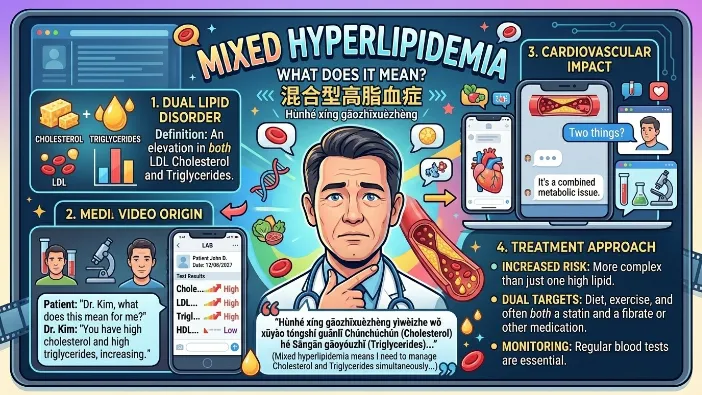
You’ve probably seen the term “mixed hyperlipidemia” online, in a doctor’s report, or during a health-related conversation and thought, “Wait… what does that even mean?
” The name sounds complicated, and many people get confused when they first hear it. Unlike texting slang or social media abbreviations, this is actually a medical term related to cholesterol and fat levels in the blood.
Quick Answer:
Mixed hyperlipidemia means having high levels of different types of fats in the blood, including cholesterol and triglycerides.
It’s a medical condition often linked to genetics, diet, lifestyle, or other health problems.
Understanding this term can help you better manage your health and know what doctors are talking about during checkups.
What Does Mixed Hyperlipidemia Mean?
Mixed hyperlipidemia is a condition where a person has:
- High LDL cholesterol (“bad” cholesterol)
- High triglycerides (a type of fat in the blood)
- Sometimes low HDL cholesterol (“good” cholesterol)
The word “mixed” means more than one type of fat level is abnormal. “Hyperlipidemia” simply means too many fats (lipids) in the bloodstream.
Doctors often discover this condition during a blood test called a lipid panel.
Example Sentence
“The doctor said my blood test showed mixed hyperlipidemia, so I need to improve my diet and exercise more.”
In short: Mixed hyperlipidemia = high cholesterol + high triglycerides = increased heart health risk.
What Causes Mixed Hyperlipidemia?
There are several common causes of mixed hyperlipidemia. Some people inherit it genetically, while others develop it because of lifestyle habits or medical conditions.
Common Causes Include:
- 🍔 Unhealthy diet high in fried or fatty foods
- 🛋️ Lack of physical activity
- ⚖️ Obesity or excess weight
- 🚬 Smoking
- 🍺 Excess alcohol use
- 🧬 Family history or genetics
- 🍭 Diabetes
- 🩺 Hypothyroidism or other medical conditions
In many cases, people may not notice symptoms at first. That’s why regular health checkups are important.
Where Is Mixed Hyperlipidemia Commonly Discussed?
Unlike internet slang, mixed hyperlipidemia is commonly used in medical and health-related settings.
📍 Common Places You Might See It
- 🏥 Doctor’s offices
- 🧪 Blood test or lab reports
- 📱 Health websites and medical blogs
- 🩺 Cardiologist appointments
- 📚 Medical textbooks and articles
- 💬 Online health forums and support groups
Tone and Usage
- ✅ Formal medical term
- ✅ Professional healthcare language
- ❌ Not casual slang
- ❌ Not used in texting or social media jokes
People usually use this term during serious health discussions rather than everyday casual conversations.
Symptoms of Mixed Hyperlipidemia
One tricky thing about mixed hyperlipidemia is that many people have no symptoms at all. The condition is often called a “silent” health issue.
However, over time, untreated high cholesterol and triglycerides may increase the risk of:
- ❤️ Heart disease
- 🧠 Stroke
- 🩸 High blood pressure
- 🚑 Heart attack
- 🦵 Poor blood circulation
In rare cases, extremely high triglycerides can cause pancreatitis, which is inflammation of the pancreas.
Examples of Mixed Hyperlipidemia in Conversation
Here are some realistic examples showing how the term may appear in conversations:
Example 1
A: “Did your lab results come back?”
B: “Yeah, the doctor said I have mixed hyperlipidemia.”
Example 2
A: “Why are you changing your diet?”
B: “My cholesterol and triglycerides are high because of mixed hyperlipidemia.”
Example 3
A: “What did the specialist say?”
B: “He wants me to exercise more to control my mixed hyperlipidemia.”
Example 4
A: “Are you taking medication now?”
B: “Yes, for mixed hyperlipidemia and blood pressure.”
Example 5
A: “Is it serious?”
B: “It can increase heart disease risk if not treated.”
Example 6
A: “How did they find out?”
B: “It showed up during a routine blood test.”
When to Use and When Not to Use Mixed Hyperlipidemia
Because this is a medical term, it should be used carefully and in the right situations.
✅ When To Use
- During medical discussions
- Talking with doctors or healthcare providers
- Explaining blood test results
- Discussing cholesterol or heart health
- Reading health-related articles
❌ When Not To Use
- Casual texting conversations
- Funny memes or jokes
- Social media slang
- Informal chats where simpler wording works better
- Situations where medical jargon may confuse people
| Context | Example Phrase | Why It Works |
|---|---|---|
| Doctor Visit | “The patient has mixed hyperlipidemia.” | Medical accuracy |
| Health Discussion | “I’m managing mixed hyperlipidemia with diet changes.” | Clear explanation |
| Family Conversation | “I have high cholesterol and triglycerides.” | Easier to understand |
| Social Media | “Trying to eat healthier for my heart ❤️” | Simpler and relatable |
How Is Mixed Hyperlipidemia Treated?
Treatment usually focuses on lowering cholesterol and triglyceride levels to reduce heart disease risk.
Common Treatments Include:
- 🥗 Eating healthier foods
- 🏃 Regular exercise
- ⚖️ Weight management
- 🚭 Quitting smoking
- 🍟 Reducing saturated and trans fats
- 💊 Cholesterol-lowering medications
- 🍬 Managing diabetes or related conditions
Doctors may recommend medications such as statins or triglyceride-lowering drugs depending on the severity.
Similar Medical Terms or Alternatives
| Term | Meaning | When to Use |
|---|---|---|
| Hyperlipidemia | High fat levels in blood | General medical use |
| High Cholesterol | Elevated cholesterol levels | Everyday conversation |
| Dyslipidemia | Abnormal lipid levels | Medical discussions |
| Hypertriglyceridemia | High triglycerides only | Specific diagnosis |
| Familial Combined Hyperlipidemia | Genetic form of lipid disorder | Genetic/medical context |
| Lipid Disorder | General fat imbalance in blood | Simplified explanation |
Why Understanding Mixed Hyperlipidemia Matters
Learning what mixed hyperlipidemia means can help people take control of their health earlier. Since the condition often has no obvious symptoms, many individuals only discover it after a routine blood test.
Early treatment and lifestyle changes can greatly reduce the risk of future heart problems. Even small habits like walking daily, eating healthier meals, and reducing sugary foods can make a difference over time.
If you ever see this term in your lab report, don’t panic. It’s common, manageable, and treatable with the right medical guidance and healthy habits.
FAQs:
Is mixed hyperlipidemia serious?
It can become serious if left untreated because it increases the risk of heart disease and stroke.
Is mixed hyperlipidemia genetic?
Yes, some people inherit it through family genetics.
Can diet improve mixed hyperlipidemia?
Yes. Healthy eating habits can help lower cholesterol and triglycerides.
Is mixed hyperlipidemia the same as high cholesterol?
Not exactly. Mixed hyperlipidemia usually includes both high cholesterol and high triglycerides.
What foods should be avoided?
Fried foods, sugary drinks, processed snacks, and foods high in saturated fat are often limited.
Can exercise help?
Yes. Regular physical activity can improve lipid levels and overall heart health.
Do people always need medication?
Not always. Mild cases may improve with lifestyle changes, but some people need medication too.
How is it diagnosed?
Doctors diagnose it using blood tests called lipid panels.
Can young people have mixed hyperlipidemia?
Yes, especially if it runs in the family or lifestyle habits contribute to it.
Is mixed hyperlipidemia curable?
It’s usually managed rather than completely cured, but treatment can greatly improve health outcomes.

Maya Angelou ek poet, memoirist aur civil rights activist thi. Uski autobiographical series I Know Why the Caged Bird Sings duniya bhar mein millions ko inspire karti hai.
Inspirational author profiles on pickuplinee.com.